Valorant in 2026 is a race from Iron to Radiant where iiTzTimmy proves rank is mostly about decisions
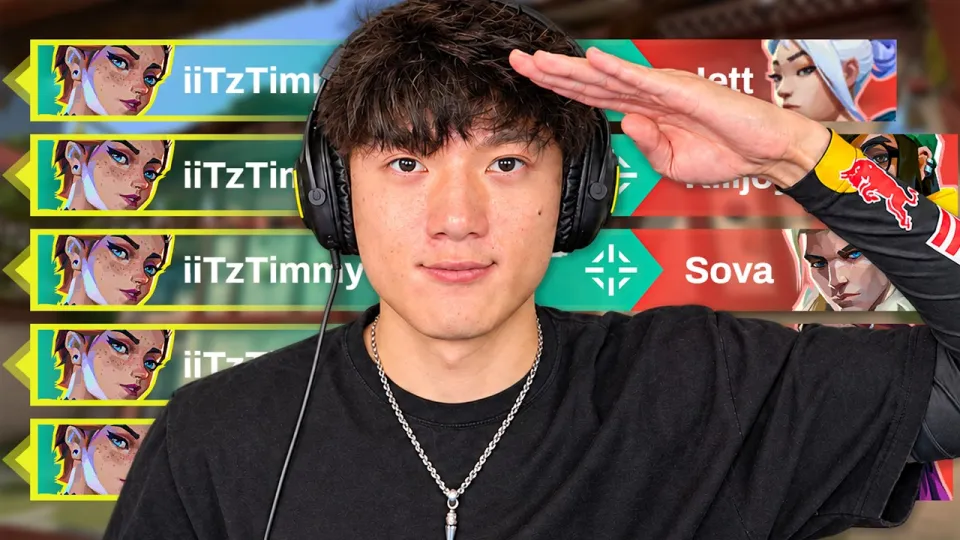
Video: I Might Be Getting TOO Good at Valorant… (Lowest To Highest Rank Challenge)
You can order the same kind of articles for your own video to boost it on YouTube and Google. Just message the Telegram bot @sat_sit_bot. The bot writes and publishes the articles itself (with your YouTube video embedded) on popular topical websites (no ads). Free trial — 50 articles.
· based on the channel iiTzTimmy Two
Valorant in 2026 rewards players who treat ranked as a decision-making game rather than an aim contest, and the lowest-to-highest rank challenge run by iiTzTimmy on the iiTzTimmy Two channel is a clean demonstration of that. Starting from the bottom of the ladder and grinding toward Radiant, the run shows that the gap between tiers is mostly mental discipline, communication and utility usage, not raw flicks. You can follow the live version of the climb on iiTzTimmy's Twitch channel, where the full sessions air before they are cut into highlights.
The format is simple enough to copy: queue from the lowest rank available, win consistently, and let the matchmaking system move you up one tier at a time until the lobby quality stops being forgiving. What makes it worth watching is not the scoreline but the friction — the moments where low-rank habits collide with a player who already knows how the map should be played.
How the lowest to highest rank Valorant challenge actually works
The challenge is a ladder climb, not a smurf montage: the account starts at the bottom and every promotion has to be earned in real matches. Because the player's actual skill sits far above the starting bracket, the interesting data is not the kill count but how quickly teammates and opponents adapt — or fail to.
A few structural points define the run:
- Every tier is played with the same ruleset as normal competitive Valorant, so Agent picks, economy and map pool are unchanged.
- Early matches are decided by fundamentals: crosshair placement, buying with the team, and not taking dry duels after the spike is planted.
- Mid-ladder matches start punishing selfish utility use, which is where the climb slows down.
- Near the top, the deciding factor shifts from individual mechanics to information — who has comms, who trades, who plays the clock.
The channel frames the series as a test of whether the player is "getting too good" for the brackets he passes through, and the honest answer the footage gives is that improvement shows up as fewer unforced errors rather than more highlight clips.
What a tilted Cypher says about mental in low elo
The most instructive segment of the run is not a clutch but a loss of composure: a Cypher player in the opening match spirals over comms he believes he is not receiving. He is first into site, dies, and blames the team; he nitpicks every call; and at one point he reacts to a cage that was never announced, arguing with teammates about a comm that exists only in his head.
That sequence is a compact lesson in why players stall in Valorant:
- Blaming the team after a failed entry removes the one variable you control, which is your own timing into site.
- Inventing comms you think you heard makes every later call unreliable, because teammates stop trusting the mic.
- Nitpicking utility usage mid-round costs more attention than the mistake itself.
The takeaway is not that the Cypher player is uniquely bad — it is that the same pattern repeats across thousands of ranked lobbies. When a sentinel main starts narrating everyone else's errors, the setup utility (trip wires, cage, camera) stops being placed with intent, and the agent's entire value disappears.
Why a Reyna being the sensible voice matters
In one of the lobbies, the Reyna — the agent usually associated with solo aggression — turns out to be the calmest and most reasonable voice on the team. That inversion is worth noting because it breaks the usual assumption that duelist instalocks are the source of chaos.
Agent choice does not determine temperament. What determines it is whether a player is willing to slow the round down:
- Reyna players who call for a coordinated flash instead of dry peeking convert their kit into team value.
- Duelists who wait for a sentinel's info before entering die less to off-angles.
- Calm voices tend to win the mid-round argument, which is where most ranked rounds are actually decided.
For anyone climbing in 2026, the practical rule is to identify the calm player in the first three rounds and route information through them, regardless of which agent they picked.
Reading the scoreboard and the bug reports viewers spotted
Audiences of the series are sharp about details, and two of their observations are worth separating from noise. One viewer questions how a player's average combat score can move from 458 to 459 in a way that looks inconsistent on screen; another flags a moment where killing Clove does not appear to refresh an ultimate that should be active again.
The first is almost always a display artefact — ACS is a running average, so the visible number updates in small increments and can look frozen when the sample size is large. The second is the kind of interaction worth reporting through official channels rather than arguing about in chat, because ultimate-refresh behaviour around Clove's kit depends on exact timing of the kill and the revive state.
What both observations share is a healthy habit: watching your own VODs and questioning numbers instead of accepting them. Players who review their ACS, economy and utility usage after each session improve faster than players who only rewatch their best clips.
Cypher setups, economy and the habits that actually move you up
If the run has one transferable lesson for ranked Valorant, it is that sentinel play is a discipline of preparation. A Cypher who places trips and a cage before the enemy commits wins rounds without firing a shot; a Cypher who reacts after contact usually loses the site and the round.
A workable checklist for the climb:
- Learn two setups per site on your three best maps instead of five setups on ten maps.
- Buy with the team — a full-buy teammate with a half-buy sentinel is a lost round, not a clever save.
- Place camera and trips to cover the retake path, not just the entry choke.
- After every death, ask whether the utility was placed before or after contact.
- Keep comms factual: location, count, and intent, with no commentary on teammates' mistakes.
These habits scale all the way up the ladder. At the bottom they win rounds against players who peek without info; near the top they are the minimum required to stay in the lobby.
Common questions about climbing from Iron to Radiant
Most doubts around this kind of series come from the same handful of places, and they are worth answering directly rather than through highlight clips. Players want to know whether a high-level run translates to their own games, whether Agent picks matter more than mechanics, and how much of ranked is decided before the first shot.
The short version: mechanics get you out of the bottom tiers, decisions keep you out of them, and communication decides the close rounds. A player who fixes unforced errors and stops narrating teammates' mistakes will climb faster than one who grinds aim trainers for another hundred hours. The full live climb, including the losses, is on Twitch.
Useful links
- Live streams: https://www.twitch.tv/iiTzTimmy
- Updates: https://twitter.com/iiTzTimmy
- Clips and photos: https://www.instagram.com/iiTzTimmy/
- Short-form video: https://www.tiktok.com/@iiTzTimmy
- Community: https://discord.gg/iitztimmy
Final takeaway
The lowest-to-highest rank challenge is less a showcase of aim than a catalogue of the habits that separate brackets: prepared utility, honest comms, and the discipline to stop blaming a team you cannot control. The Cypher meltdown and the unexpectedly level-headed Reyna are the two poles of the same lesson, and both are more useful to a ranked player than any single clutch. iiTzTimmy Two packages the run as entertainment, but the underlying pattern is a study guide for anyone stuck between tiers. Watch the live sessions on iiTzTimmy's Twitch channel if you want to see the climb without the edit.
Key takeaways
- The challenge format: start at the bottom of the ladder and climb toward Radiant, one rank tier at a time.
- iiTzTimmy Two is the channel behind the run; full live sessions stream on https://www.twitch.tv/iiTzTimmy.
- A Cypher player in the opening match tilts over missing comms and invents calls that were never made.
- A Reyna ends up being the calmest voice in one lobby, which flips the usual stereotype of duelist mains.
- Viewers flag a possible bug where a kill on Clove does not refresh the ultimate, plus a scoreboard oddity in ACS.
Source: I Might Be Getting TOO Good at Valorant… (Lowest To Highest Rank Challenge) · Markdown version
Questions & answers
Is the lowest to highest rank challenge the same as a smurf run?
No. A smurf run hides the player's real rank to farm easier lobbies, while this format openly starts at the bottom and climbs tier by tier as a documented challenge. The point is to show how match quality and decision-making change as the bracket improves, not to collect easy kills.
Why do low-rank players tilt over comms so easily?
Because comms are the easiest thing to blame when a round fails. In the opening match of the run, a Cypher player argues about a call nobody made and criticises every teammate action, which removes his attention from his own setup and timing. Fixing that habit usually gains more rank than improving aim.
Does Agent choice decide whether you climb in Valorant?
Agent choice matters far less than temperament and utility discipline. A duelist who waits for information and calls coordinated flashes brings more value than a passive sentinel who never places setups, and the calmest voice in a lobby often decides the close rounds regardless of pick.
What should a sentinel player practise first?
Two reliable setups per site on your three strongest maps, plus a consistent buy pattern with the team. Place camera and trips to cover the retake path rather than only the entry choke, and review after each death whether the utility went down before or after contact.